A song to friendship
Brahms spent many summers in Thun, a picturesque Swiss town surrounded by the Alps. The landscape and atmosphere offered the composer the perfect space to create and reflect. It was in this idyllic setting that, in 1887, Brahms composed his Double Concerto for violin, cello and orchestra, dedicating it to his old friend, the violinist Joseph Joachim.
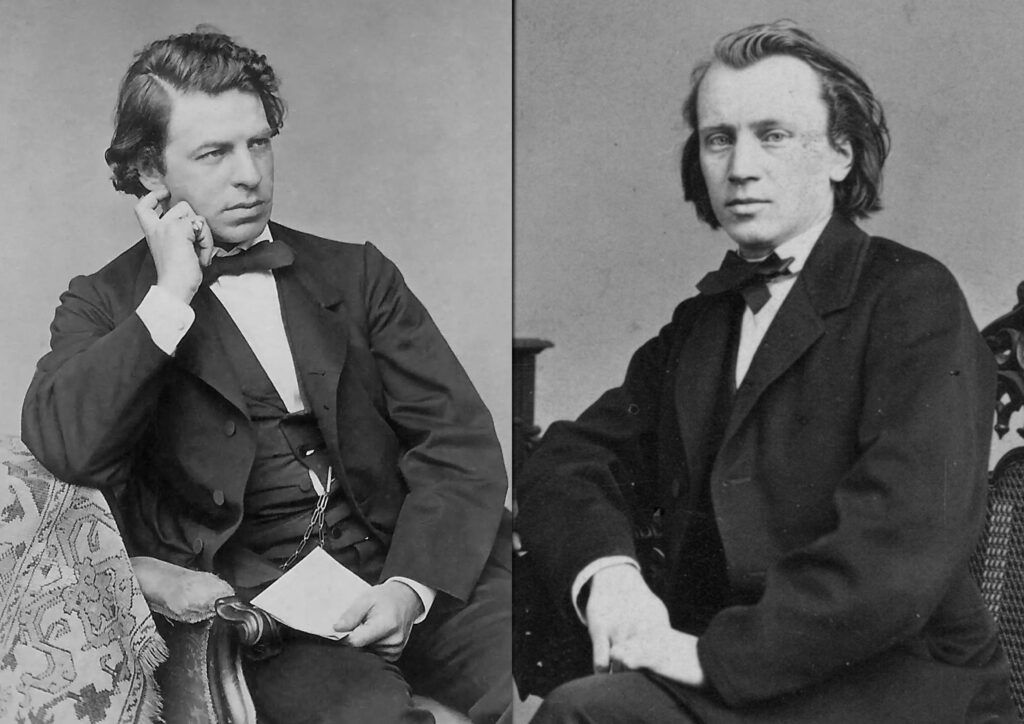
Their friendship had been strained for years by Joachim’s separation from his wife, in which Brahms had stood by her. This discrepancy had created a painful distance between the two musicians.

Brahms dedicated the concerto to Joachim, hoping to reestablish their relationship. Clara Schumann, a close friend of both, wrote: "This concerto is a work of reconciliation—Joachim and Brahms have spoken again for the first time in many years."
On 18 October 1887, the Double Concerto was premiered in Cologne, with Joseph Joachim on violin and Robert Hausmann on cello, under the baton of Brahms himself. The Double Concerto featured a dialogue between violin and cello that, for those familiar with its history, was the sonic reflection of a rediscovered friendship, a song to true friendship.
REPERTOIREÇ
J. Brahms: Double Concerto for Violin, Cello and Orchestra, Op. 102ç
F. Mendelssohn: Symphony No. 3, Op. 56 ‘Scottish’
PERFORMERS
Daishin Kashimoto, violin
Alexander Chaushian, cello
Franz Schubert Filharmonia
Tomàs Grau, conductor